How event-based CRM works, with a Ludora example

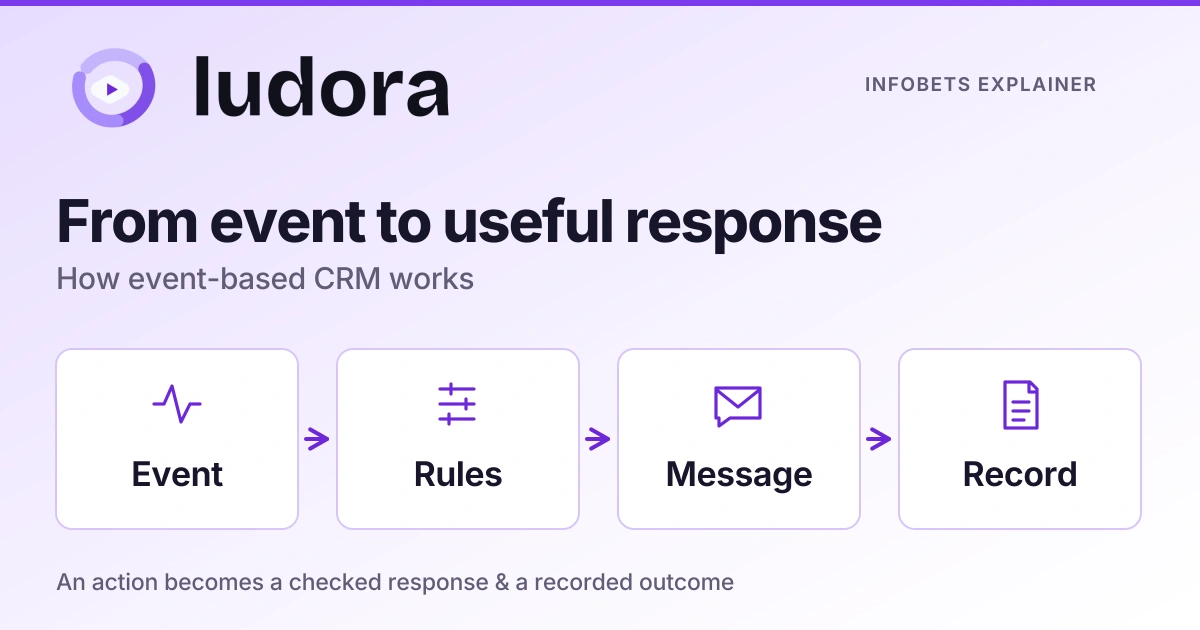
Event-based CRM responds to something that happened. A new account, a changed preference or a completed step can start a defined workflow. The timing comes from the customer’s situation.
CRM means customer relationship management. In this context, it connects activity records with rules about who should receive a message, when it is useful & whether it should be sent at all.
Four parts of the process
- The event: a system records an action against the right customer.
- The rules: the workflow checks eligibility & chooses a response.
- The delivery: the message or action reaches its destination.
- The record: the team can see what happened next.
Ludora’s lifecycle campaigns use behaviour as a trigger. Its modules share activity records, so CRM can work from the same underlying events as other parts of the product. The published event guide describes records containing a player identifier, event type, timestamp & relevant context.
An illustrative welcome journey
Imagine an operator introducing a new account holder to its help centre. Registration starts the journey. The workflow checks that the account is eligible for the communication, then sends a short introduction to support & account settings.
If that registration event arrives twice, the person should still receive one welcome. If they have already completed the introduction, the next step should reflect that. These are useful acceptance tests when designing a workflow; this example is not a named operator campaign.
Useful automation includes restraint
A frequency cap limits repeated contact across campaigns. Permission, account status & the purpose of the communication should be checked before delivery. A trigger creates an opportunity to help; it does not make every message useful.
Finally, distinguish a planned action from a delivered one. Ludora’s reporting separates campaign activity from reward delivery. For the welcome example, the practical questions are straightforward: was the account eligible, did the message arrive & did it answer a useful question?
That is a clearer brief for a CRM team than simply asking it to send more.
Sources
- Ludora: lifecycle CRM, shared events & campaign reporting
- Ludora: lifecycle campaigns & frequency caps
- Ludora: event records
- Ludora: campaigns versus missions
Sources checked 6 September 2026.