How modular gamification & loyalty connect

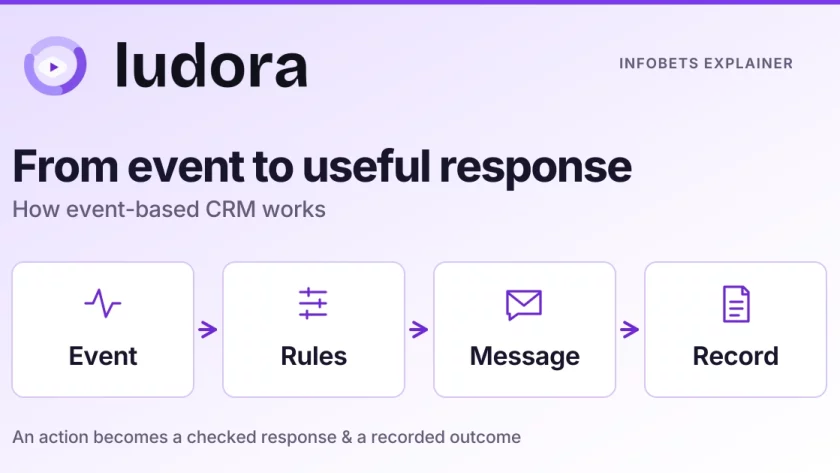
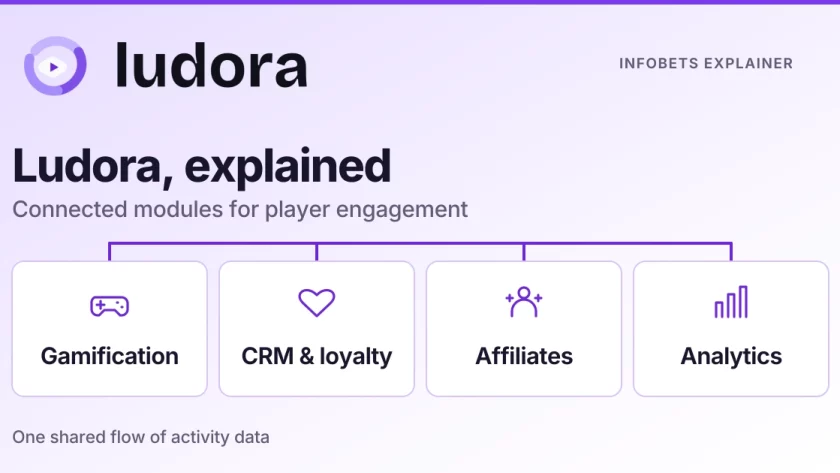
Modular gamification lets a business connect selected features, such as missions or badges, to its existing systems. Loyalty adds rules for longer-term status. With Ludora, those modules can use the same stream of activity records.
Start by deciding what each feature means. A mission has defined steps. A tournament uses a ranking. A season follows a time-limited progression track. A loyalty tier describes status under a separate set of rules. Similar-looking progress bars can represent very different things.
Three connections to understand
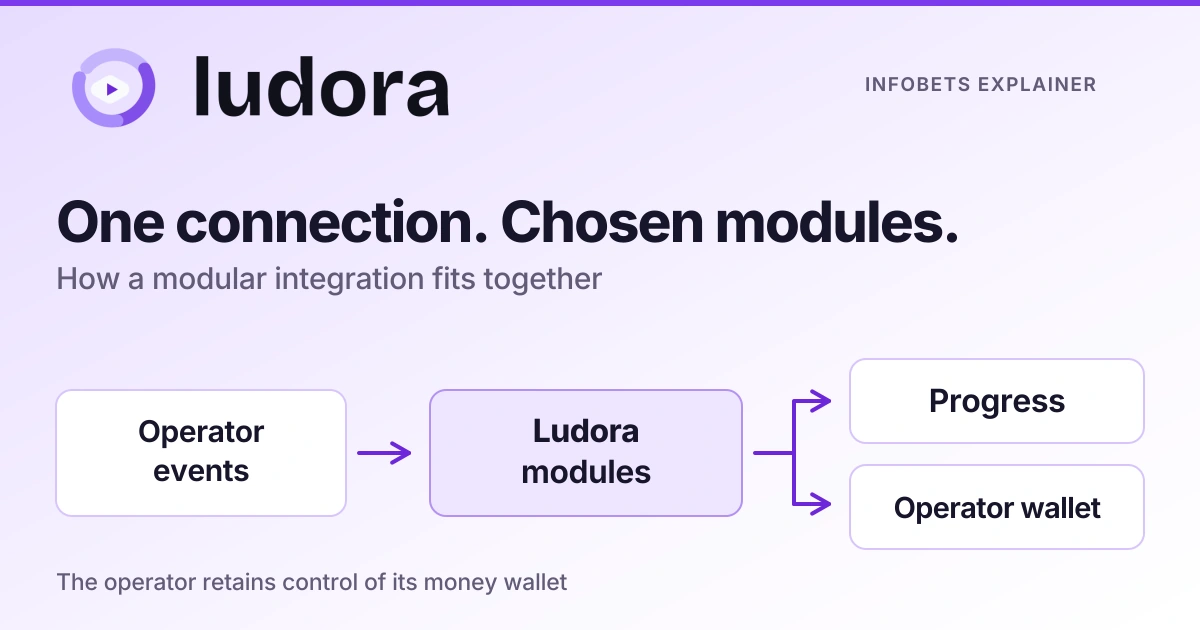
Ludora’s integration guide sets out three main flows:
- Events go in. The operator sends records of relevant activity to the event API.
- Progress comes back. The interface retrieves information such as mission progress or badge collections.
- Reward instructions arrive. A webhook notification, or a queue the operator checks, tells its own system what to deliver.
The player-facing display can use Ludora’s widgets or a custom interface built with its data API. Ludora’s product description keeps the operator’s money wallet responsible for its balance.
Follow one test account
For an illustrative integration test, create a fictional account in a test environment. Send a qualifying event for a configured badge, retrieve the progress, then confirm that the correct badge appears for that account.
If the test includes a reward, follow the delivery through to the operator’s system. A rule marking something as earned is one step; a successful delivery is another. Check how support would investigate a missing result.
Make the first release easy to verify
Agree the event definitions, eligibility rules, display & reporting before adding more features. Include duplicate events, delayed delivery & ineligible accounts in the test plan. These checks help expose gaps that a successful demonstration alone can miss.
Ludora’s published checklist also calls for staging tests, review of responsible-gambling configuration, monitoring & a rollback plan.
A focused first module gives product, engineering & support a shared example they can inspect. Expand once the complete journey is clear, from the original event to what the customer actually sees.
Sources
- Ludora: module distinctions
- Ludora: events, progress & reward delivery
- Ludora: integration checklist
- Ludora: operator wallet boundary
Sources checked 6 September 2026.