What is Ludora? Its operator software explained

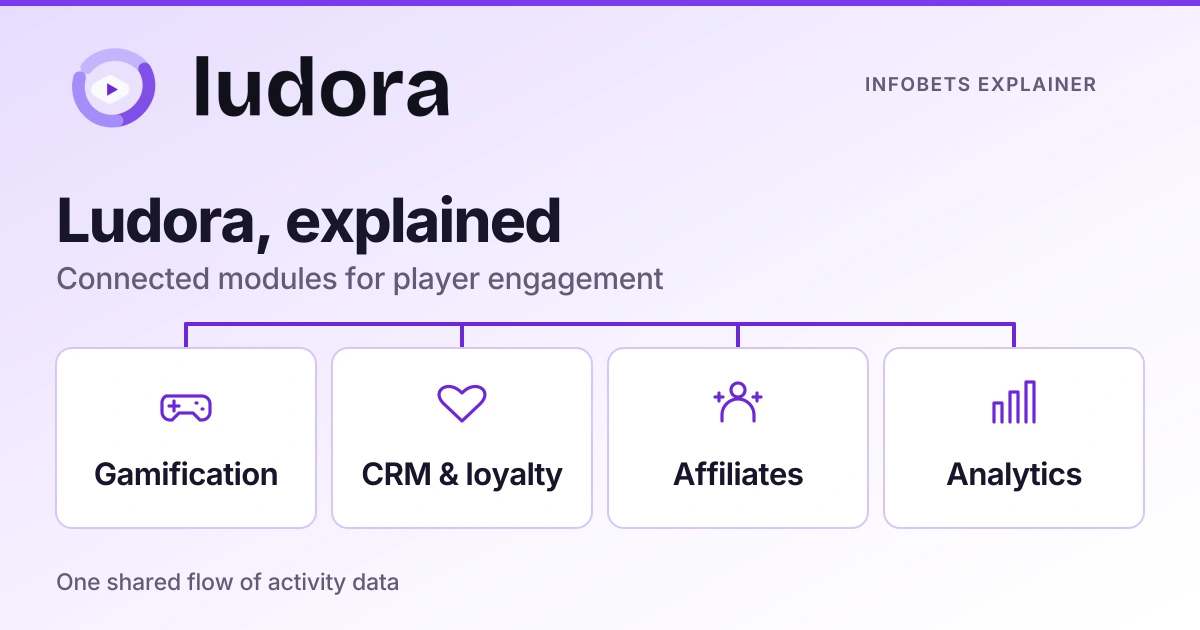
Ludora is software for casino & sportsbook operators. It connects gamification, customer relationship management (CRM), loyalty, affiliate management & analytics through a shared flow of activity data. Operators choose the modules they need.
That makes it relevant to several teams: product managers designing an experience, CRM teams managing communications, affiliate teams tracking referrals & developers connecting the systems.
What the modules do
- Gamification: missions, tournaments, seasons, badges & a rewards market organise different kinds of progress.
- CRM & loyalty: behaviour can trigger communications, while loyalty rules manage tier status.
- Affiliates & referrals: tools track business partners or customers who introduce someone else.
- Analytics: reporting brings activity & outcomes into a common view.
The distinctions matter. A tournament ranks participants against one another. A mission follows an individual set of steps. An affiliate programme involves commercial partners; a refer-a-friend programme involves existing customers.
How the pieces connect
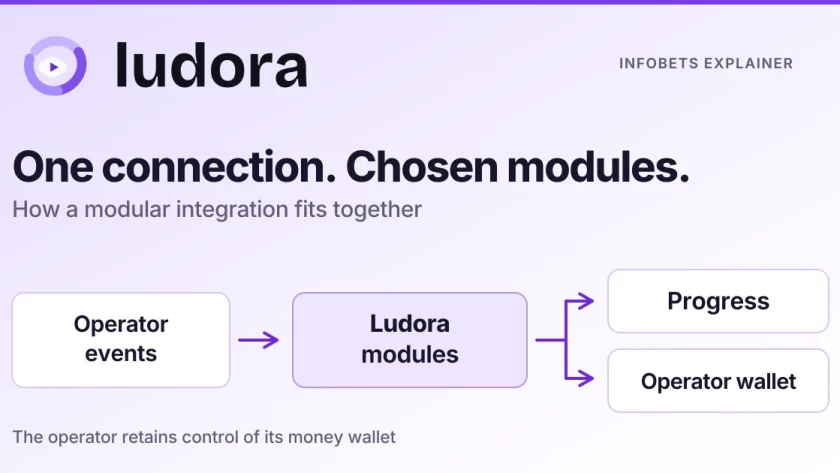
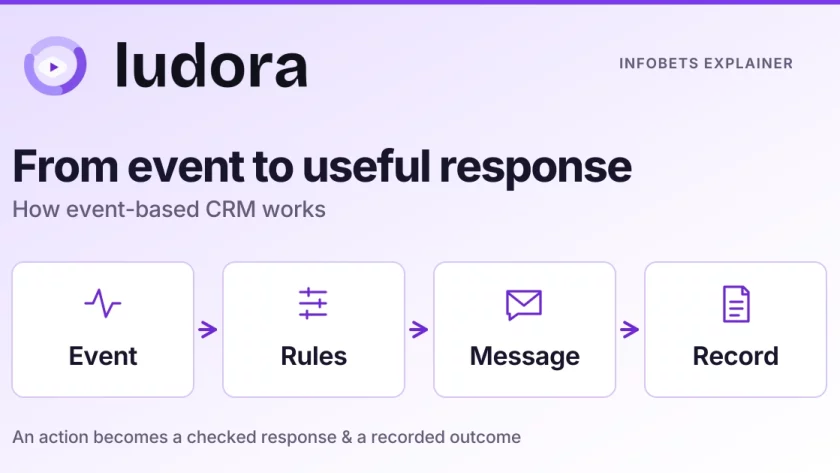
An event is a record of something that happened, such as an account registration or login. The operator sends those records to Ludora. Licensed modules use them to update the relevant progress, rules or reporting.
Ludora describes this as a shared integration: a team can begin with one module, then add another that uses the same event history. Common services, including event intake, sign-in & in-app messaging, are included with a licensed module.
A simple way to assess it
Imagine a product team that wants a clear badge experience. Its first test could follow one fictional account from a qualifying test event to a visible badge. Support should be able to understand why that badge appeared. Only then does the team need to consider additional modules.
Where a rule grants a reward, Ludora sends the instruction back to the operator’s system. The operator’s money wallet retains control of its balance.
A useful product conversation therefore starts with a specific workflow: the event, the rule, the player-facing result & the report. That gives everyone something concrete to assess.
Sources
Sources checked 6 September 2026.