
The Ultimate Guide to Padel Betting
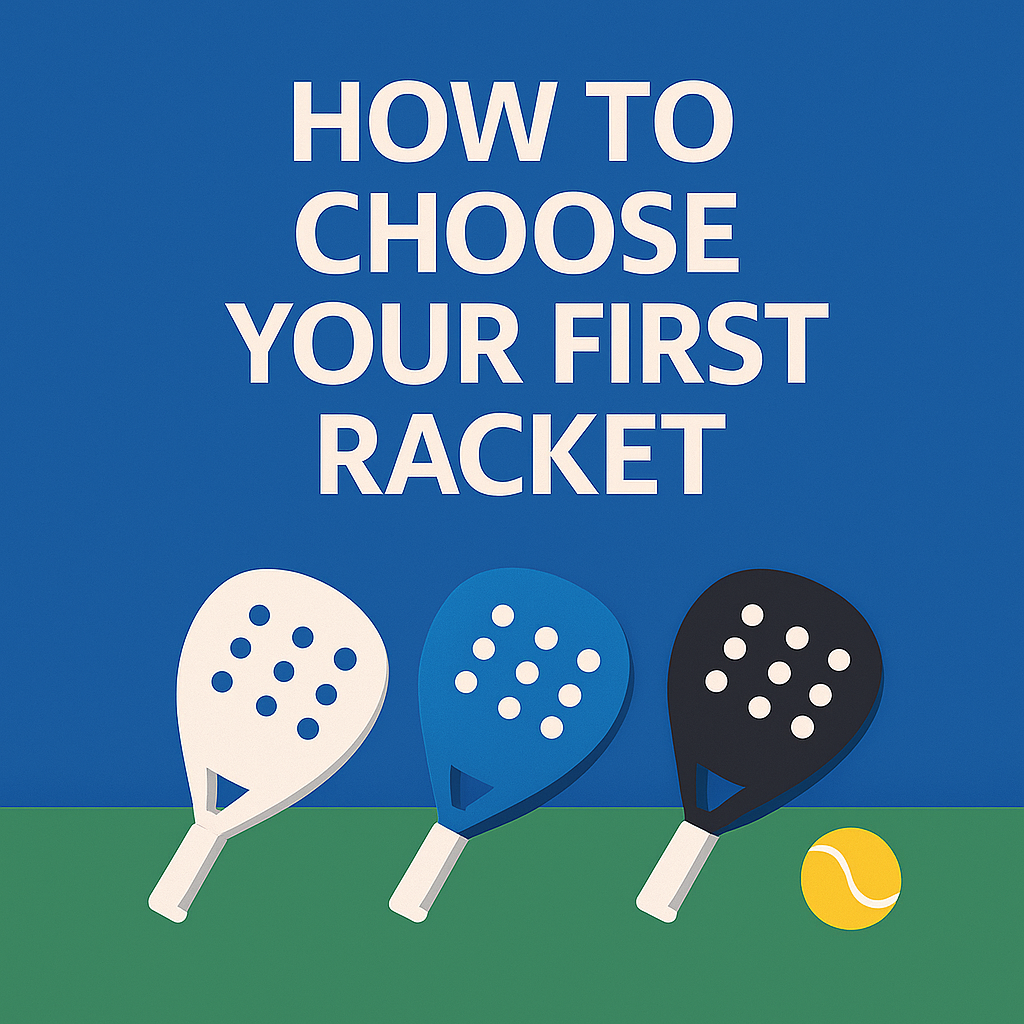
Choosing your first padel racket is one of the biggest steps in your padel journey. The right racket makes learning easier, improves your control, reduces mistakes & prevents injuries. This guide breaks down everything beginners need to know — in simple, clear steps.
Step 1 — Determine Your Playing Level
✔ Absolute beginner
- You’ve played 0–10 times
- Focus on control + comfort
✔ Beginner–intermediate
- You’ve played 10–50 times
- You want balanced power + control
✔ Athletic beginner
- You come from tennis/squash
- Your progression will be fast
Your level influences the racket shape, weight & materials.
Step 2 — Choose the Right Racket Shape
There are three racket shapes. Pick based on your style.
✔ Round Shape — Best for Beginners
- Maximum control
- Large sweet spot
- Most forgiving
✔ Teardrop Shape — Best for Fast Learners
- Balanced power + control
- Medium difficulty
✔ Diamond Shape — Avoid as a First Racket
- Harder to control
- Small sweet spot
- For advanced attackers only
Recommendation: 90% of beginners should choose Round.
Step 3 — Choose the Right Weight
Weight determines comfort & manoeuvrability.
✔ Light (340–360g)
- Easier to swing
- Great for beginners
- Prevents elbow injuries
✔ Medium (360–370g)
- Good for athletic beginners
- More power
❌ Heavy (370–385g)
- Too aggressive for beginners
- Higher injury risk
Best Choice: 350–365g for your first racket.
Step 4 — Pick the Correct EVA Core
The EVA core affects feel, comfort & vibration.
✔ Soft EVA (Best for beginners)
- Most comfortable
- Easy to control
- More forgiveness
✔ Medium EVA (OK)
- Balanced feel
- Good for quick learners
❌ Hard EVA (Avoid)
- Requires technique
- Less forgiving
Step 5 — Choose a Trusted Brand
Avoid unknown cheap brands — they break quickly & feel unstable.
Top brands for first-time buyers:
✔ Nox
✔ Head
✔ Bullpadel
✔ Adidas
✔ Babolat
All of these produce durable, beginner-friendly models.
Step 6 — Pick Essential Features
✔ Large sweet spot
✔ Soft foam feel
✔ Comfortable grip
✔ Anti-vibration system (optional but helpful)
✔ Round shape recommended
These features reduce mistakes & help you learn faster.
Step 7 — Set a Realistic Budget
You don’t need a €300 racket to start.
Recommended beginner budget:
- €70–€150 → Perfect beginner range
- €150–€220 → Premium beginner/intermediate
Avoid:
- Ultra-cheap €30–€40 rackets — poor durability
- Advanced €250+ rackets — unnecessary
Best Rackets for First-Time Players
Here are the top picks depending on your profile.
⭐ Best Overall Beginner Racket:
Head Evo Sanyo 2025
- Super comfortable
- Very forgiving
- Ideal for new players
⭐ Best Value Racket:
Nox X-One Casual 2025
- Durable
- Great control
- Affordable
⭐ Best for Fast Learners:
Adidas Adipower Lite 3.3
- Balanced power
- Great for progression
⭐ Best Lightweight Option:
Head Zephyr UL 2025
- Easy to swing
- Perfect for smaller or younger players
Common Mistakes When Choosing a First Racket
❌ Choosing a diamond racket too early
❌ Buying a heavy racket for “more power”
❌ Picking a racket only because a pro uses it
❌ Buying a cheap no-name racket
❌ Ignoring comfort & vibration control
Simple First-Racket Checklist
Choose a racket with:
✔ Round shape
✔ 340–365g weight
✔ Soft EVA core
✔ Large sweet spot
✔ Trusted brand
✔ Comfortable grip
If a racket ticks all these boxes → it’s a safe beginner choice.
Summary
Choosing your first racket comes down to comfort, control & forgiveness. Start with:
- A round racket
- Light–medium weight
- Soft EVA core
- A quality brand
This ensures fast progress, fewer errors & a more enjoyable playing experience.